

Table of Contents
- Why Whatcom County Flood Insurance Options Matter
- How to Read Whatcom County Flood Maps
- National Flood Insurance Program Whatcom County Coverage
- Private Flood Insurance Washington: When It Beats the NFIP
- The Flood Insurance Waiting Period Explained
- What Drives Your Flood Insurance Premium
- Step-by-Step: Buying Flood Coverage in Whatcom County
- Frequently Asked Questions
Last Updated: October 21, 2026
Why Whatcom County Flood Insurance Options Matter
Flooding is the most common and costly natural disaster in the United States, and standard homeowners policies typically exclude it. That gap matters here: rivers, coastal tides, and heavy winter rain put many local properties in mapped flood zones, and a single event can cause damage that runs into tens of thousands of dollars. This guide from Kaiser Agency walks through the Whatcom County flood insurance options available to homeowners, the maps that set your requirements, and the practical steps to buy coverage before the rainy season. Below, we show you exactly how the National Flood Insurance Program and private carriers differ, and where each one fits.
Flood insurance is a separate policy that pays for water damage from rising water, storm surge, and mudflow, none of which a standard homeowners policy covers. Lenders require it in high-risk zones, but the coverage is worth considering well beyond those boundaries. Securing a policy provides a vital financial buffer against the significant water damage restoration costs that often follow an unexpected flood event.
How to Read Whatcom County Flood Maps
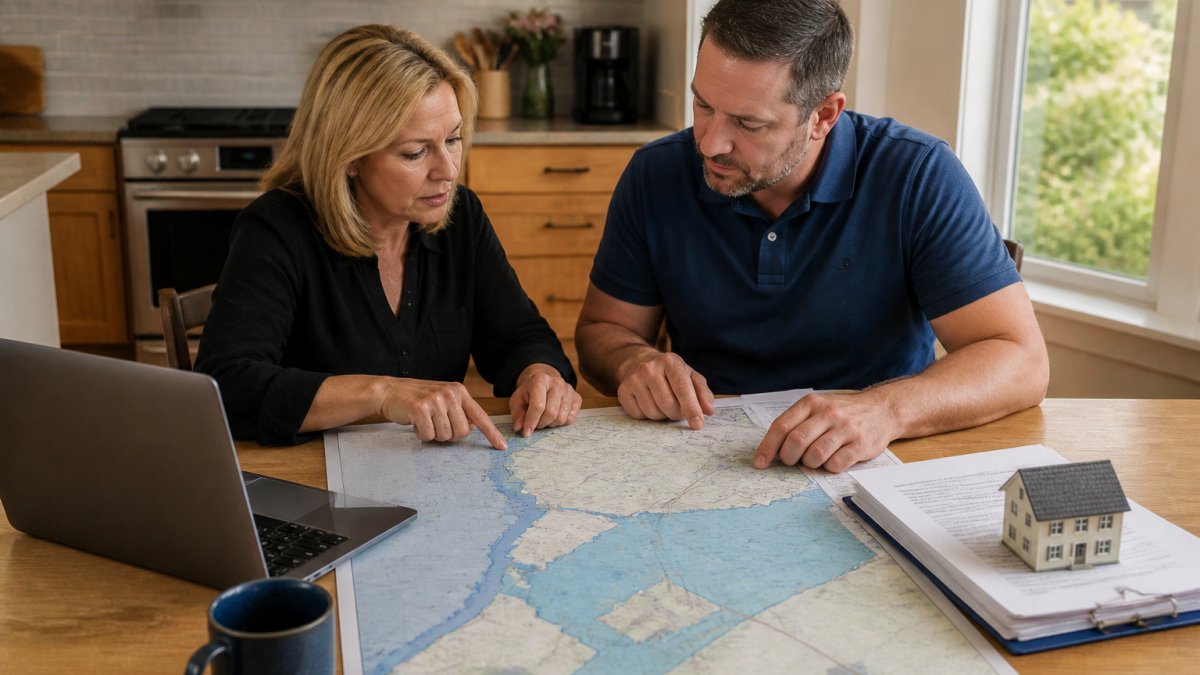
Start with the map, because it decides almost everything that follows. Whatcom County flood maps assign every property a flood zone, and that designation drives whether your lender requires coverage and how carriers price a policy. The maps are maintained through the Federal Emergency Management Agency's flood mapping program, and you can look up a specific address through FEMA's Flood Map Service Center.
Zone Designations That Affect Your Premium
High-risk zones carry the letter A or V and are labeled as special flood hazard areas. Moderate-risk zones appear as shaded X, and minimal-risk areas as unshaded X. V zones sit along coastal areas with wave action and price highest. A common mistake is assuming a moderate-risk zone means no risk at all. Roughly a quarter of all flood claims historically come from properties outside high-risk areas, according to FEMA flood insurance guidance, which is why we tell clients to treat the map as a starting point rather than a verdict.
National Flood Insurance Program Whatcom County Coverage
The National Flood Insurance Program Whatcom County homeowners rely on is the federally backed option administered by FEMA. It is available in participating communities, and most local jurisdictions take part. The NFIP is the simplest path for properties in high-risk zones, because lenders accept it and pricing follows federal rules rather than a private carrier's appetite for risk.
NFIP Coverage Limits and What They Exclude
NFIP policies cap building coverage and contents coverage at set limits that adjust over time, and the program publishes current figures. Rather than quote a number that may change, check the official NFIP coverage limits before you buy. What the program excludes matters just as much:
- Decks, patios, and pools outside the building envelope
- Currency, stock certificates, and valuable papers
- Temporary housing costs in most cases
- Basement contents beyond limited categories
Private Flood Insurance Washington: When It Beats the NFIP
Private flood insurance Washington carriers now compete directly with the federal program, and for some properties they win. Private policies can offer higher coverage limits, broader contents protection, and pricing that reflects your actual risk rather than a federal zone average. They can also cover a property during the gap before an NFIP policy takes effect.
When does private make sense?
- You need coverage above the federal caps
- Your property sits in a moderate-risk zone where private pricing is competitive
- You want replacement cost rather than actual cash value on contents
- Your closing date is tight and the federal waiting period would delay it
The trade-off is that private carriers can decline a property, adjust rates at renewal, or exit a market. We weigh both options side by side for each client rather than defaulting to one.
The Flood Insurance Waiting Period Explained
The flood insurance waiting period is typically 30 days before coverage takes effect, and that single rule catches more buyers off guard than any other. You cannot buy a policy the week before a storm and expect protection. Under the federal program, the standard wait applies to most new policies, with limited exceptions such as a lender-required purchase at closing or a map change that newly requires coverage. Private carriers set their own terms, and some shorten or waive the wait in specific situations.
What Drives Your Flood Insurance Premium
Several factors set your rate, and understanding them helps you see why two neighboring homes can pay very different amounts. The zone on the map is the biggest driver, followed by the elevation of the lowest floor relative to the base flood elevation. Building characteristics matter too: foundation type, number of floors, and whether the structure has a basement or enclosure below grade.
Send us a referral for a Home and Auto Quote →
Then come the details that reflect how a loss would play out. Deductibles, coverage amounts, and whether you insure contents all move the number. So does the claims history of the property itself. A home that has flooded before carries more risk, and carriers price accordingly. We review each of these with clients so the quote they receive reflects their actual exposure, not just a zone lookup.
Step-by-Step: Buying Flood Coverage in Whatcom County
Buying coverage follows a clear sequence, and working through it in order avoids the delays that come from missing a document or a deadline. Here is how we would do it.
| Step | Action | What It Settles |
|---|---|---|
| 1 | Look up your zone on the flood map | Whether coverage is required |
| 2 | Note your lowest floor elevation | How the property will be rated |
| 3 | Inventory contents and structure value | How much coverage to carry |
| 4 | Compare NFIP and private quotes | Which option fits your risk |
| 5 | Confirm the waiting period date | When protection actually starts |
| 6 | Bind the policy and store the declarations page | Proof for your lender |
A few notes on the steps. Elevation certificates are the document that most often slows a purchase, so request one early if your property is in or near a high-risk zone. On the comparison step, get both quotes in writing and check the deductibles and settlement basis, not just the premium. And on timing, confirm the effective date in writing before you assume you are covered.
That is where a local agency earns its keep. Kaiser Agency works with Allstate flood coverage and can review your homeowners policy alongside a flood quote to make sure the two fit together, including Claim RateGuard® protection on the home side so a claim does not automatically raise your premium.
Flood season does not wait for paperwork, and the 30-day waiting period means the best time to act is well before the first heavy rain. If you are unsure whether your property sits in a mapped zone or whether your current policy leaves a gap, let us look at it with you. Kaiser Agency can compare National Flood Insurance Program and private flood options, review your homeowners coverage for exclusions, and confirm the effective date in writing. Send us a referral for a home and auto quote, and we will help you close the gap before the water rises.
Frequently Asked Questions
Is flood insurance required in Whatcom County?
It depends on your property's flood zone and your lender. If you carry a federally backed mortgage and your home sits in a high-risk Special Flood Hazard Area, federal law requires flood coverage for the life of the loan. Homes outside those zones are not legally required to carry it, but standard homeowners policies exclude flood damage, so many Whatcom County owners buy coverage anyway to protect their equity.
Does homeowners insurance cover flood damage?
No. A standard homeowners policy in Washington excludes flooding, including overflow from rivers, creeks, and storm surge. Water damage from a burst pipe or a leaking roof is usually covered, but rising water is not. That gap is why flood insurance options in Whatcom County are worth reviewing separately from your home policy, whether you buy through the NFIP or a private carrier.
Can I buy flood insurance if my home is outside a high-risk flood zone?
Yes. Both the National Flood Insurance Program and private carriers sell coverage in moderate- and low-risk zones, and rates there are typically lower. Roughly a quarter of all NFIP flood claims come from properties outside high-risk areas, so low-zone status does not mean no risk. Ask an agent to pull your property's zone from the Whatcom County flood maps before you decide to skip coverage.
How long does flood insurance take to become effective?
The standard flood insurance waiting period is 30 days after purchase for most NFIP policies. Private flood insurance Washington carriers often shorten that window, sometimes to 10 or 14 days. A few exceptions waive the wait entirely, such as a new mortgage closing or a map revision. Time your purchase before storm season, not after a flood watch is issued, because you cannot buy coverage during an active event.
How can I compare NFIP and private flood insurance?
Start with the NFIP policy: it caps building coverage at $250,000 and contents at $100,000 for residential properties. Private carriers can exceed those limits, may include basement contents, and often price differently for low-risk homes. Compare the deductible, the waiting period, and whether loss of use is included. A local agent can run both quotes side by side so you see the real difference in premium and payout.
Where can I check flood risk for a Whatcom County property?
Use the FEMA Flood Map Service Center to look up the official zone for any address, and cross-check it with Whatcom County's own mapping tools, which reflect local river and coastal data. Ask your lender for the flood determination form on a purchase. An agent can also review the zone, base flood elevation, and claims history to tell you how the map translates into a premium.